It's time to go back to nature.
We are revolutionizing global freight by partnering with the most calorically efficient long-distance navigators on Earth. Forget diesel engines. Forget bunker fuel emissions. Leviathyn harnesses seasonal whale migrations to charter scheduled, zero-emission Symbiotic Biological Vessels (SBVs) across the open seas.
Chartered migratory routes.
Scheduled seasonal departures partnering with the most calorically efficient long-distance navigators on Earth to form chartered Symbiotic Biological Vessel (SBV) networks.
Blue, Fin, Humpback, Gray, and Right whales follow a clockwork thermal calendar: as the most calorically efficient long-distance navigators on Earth, they migrate poleward into cold waters each spring to feed, and return to warm equatorial waters each autumn to breed. By pairing freight with this natural schedule (hauling Q4 holiday electronics, timber, and counter-seasonal harvests southbound ahead of winter, while carrying Arctic port restocks and passively seawater-chilled pharmaceuticals northbound in spring), Leviathyn establishes audited Symbiotic Biological Vessel (SBV) transit loops. When an SBV passes the offshore perimeter of a destination port, a GPS trigger automatically releases its buoyant container pod to the surface, where a coastal feeder boat feeds the whale, tows the inbound payload ashore, and can guide the whale to a nearshore staging buoy to snap on outbound cargo.
Who we build for.
Commercial logistics applications and enterprise carbon frameworks for biological transit.
Commercial Shippers & Cargo Owners
Global supply chains face escalating Scope 3 penalties and bunker surcharges. Leviathyn is developing audited, zero-emission trans-oceanic container loops engineered to deploy SBVs into scheduled seasonal enterprise logistics.
Sovereign Blue Routes
International waters protected through active cetacean transit charters. Our transit framework is engineered to qualify as SBVs under future UNCLOS and IMO green route pacts.
Verified Blue Carbon & Scope 3 Insets
High-integrity carbon assets certified under verified international registries (Verra VCS / UNFCCC Article 6). By replacing bunker fuel combustion with audited SBV transit, corporate shippers generate auditable Scope 3 supply chain insets while financing ocean sanctuary protections.
Subsea Cable Monitoring
Surface warships are too loud and uncrewed underwater drones lack operational range. Gliding silently along continental shelves with acoustic stealth and biological endurance, SBVs carry passive sensor pods to monitor deep-sea fiber optic cables.
Cetacean Riding Inquiries
We receive constant inquiries regarding human saddles and recreational whale riding. While our engineering team is actively exploring biological passenger interfaces, all public access and private bookings remain strictly closed off for now.
How biological freight works.
Our core three-pillar engineering architecture converting the most calorically efficient long-distance navigators on Earth into autonomous SBVs.
Deep-Water Autonomous Staging & Transfer
Whales never enter shallow, crowded commercial harbors. Automated feeder and logistics vessels meet SBVs 15 to 30 miles offshore in designated deep-water staging areas to detach incoming containers, secure outbound cargo, and dispense concentrated high-calorie krill-plume nutritional refueling slurries.
Non-Invasive Sensory Vector Guidance
Non-invasive transcranial ultrasound transducers project subtle directional cues directly into the cetacean parietal cortex. Course alignment feels completely natural to the pod, requiring zero physical steering or mechanical restraint.
Syntactic Buoyancy Pods
Engineered from positive-buoyancy syntactic foam composites, our modular container pods equip SBVs with zero skin drag, riding naturally on the dorsal slipstream with dual-redundant acoustic quick-release safety systems.
Publications & News.
Scientific preprints, macroeconomic analyses, and regulatory policy whitepapers.
Nature's Solution to Climate Change: A Strategy to Protect Whales Can Limit Greenhouse Gases and Global Warming
Landmark economic analysis by Ralph Chami, Thomas Cosimano, Connel Fullenkamp, and Sena Ozturk estimating the carbon sequestration capacity of a single great whale at more than $2 million.
Determining the Economic Value of Trans-Oceanic Cetacean Migration Routes Between Major Global Shipping Ports
An empirical econometric evaluation quantifying avoided bunker fuel expenditures, carbon credit yield, and capital vessel depreciation across high-volume Pacific and Atlantic trade lanes.
Hydrodynamic Slipstream Optimization and Drag Minimization in Syntactic Cetacean Tow Pods
Computational fluid dynamics and laminar flow modeling of neutral-buoyancy container pods aligned with the dorsal boundary layers of baleen cetaceans.
Transcranial Parietal Ultrasound Guidance: Non-Invasive Spatial Vectoring in Pelagic Cetaceans
Evaluating non-invasive micro-sensory directional cueing in baleen whale navigation pathways without acoustic disturbance or physiological stress markers.
SBV Framework: Establishing Sovereign Blue Routes Under UNCLOS Article 238
Legal and regulatory blueprints for classifying animal-partnered zero-emission maritime transit across high-seas routes and contiguous economic zones.
Executive Directorate & Science.
Swipe or scroll horizontally through our multidisciplinary leadership team. Click any card to inspect credentials.

Julian Voss
Founder, CEO & Head of Blue Carbon Economics
Ex-Maersk Line · BSc Maritime Studies, Plymouth
Devendra Hegde, PhD
VP of Marine Systems & Robotics
BTech IIT Bombay · PhD IISc Bangalore
Katherine Sterling
Chief Financial Officer & VP of Capital Markets
Ex-Goldman Sachs · Seed Capital Lead
Siobhan Thorne, PhD
Chief Cetacean Scientist
Ex-Woods Hole · PhD Scripps
Nikolai Chen, PhD
VP of Neural Interfaces & Guidance
Ex-Neuralink & DARPA · Johns Hopkins
Aris Thorne-Lowe, DVM, PhD
Chief Veterinary Officer & Head of Cetacean Welfare
Doctor of Veterinary Medicine · Lead Cetacean Clinician
Helena Lindqvist
VP of Regulatory Affairs & Policy
Ex-IMO Secretariat · Oslo Law
Capt. Kenji Sato
Head of Offshore Recovery & Fleet Ops
Master Mariner · Ex-NYK OffshoreOfficial Apparel.
Custom designed organic cotton and silk goods celebrating symbiotic maritime freight.
 Sold Out
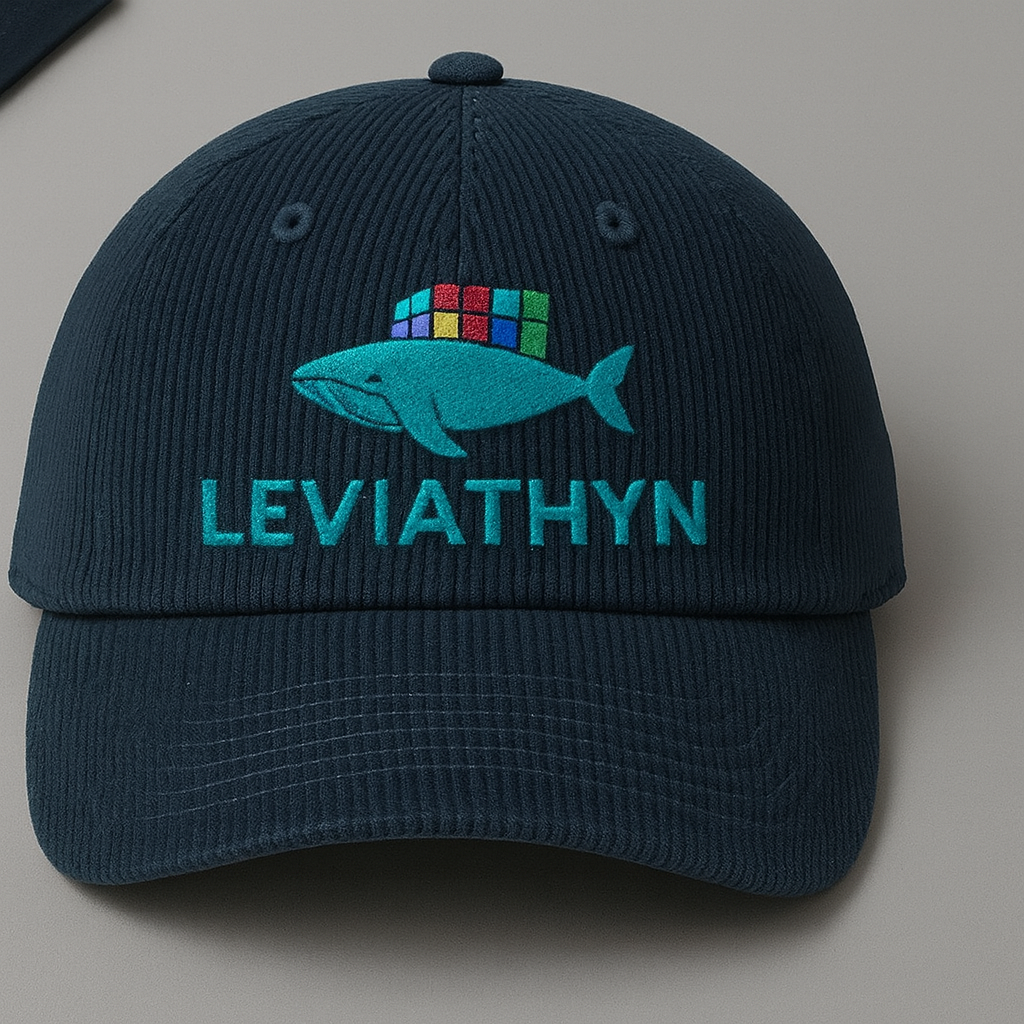
Leviathyn Structured Cap
Durable cotton twill snapback featuring embroidered signature Leviathyn teal typography.
 Sold Out
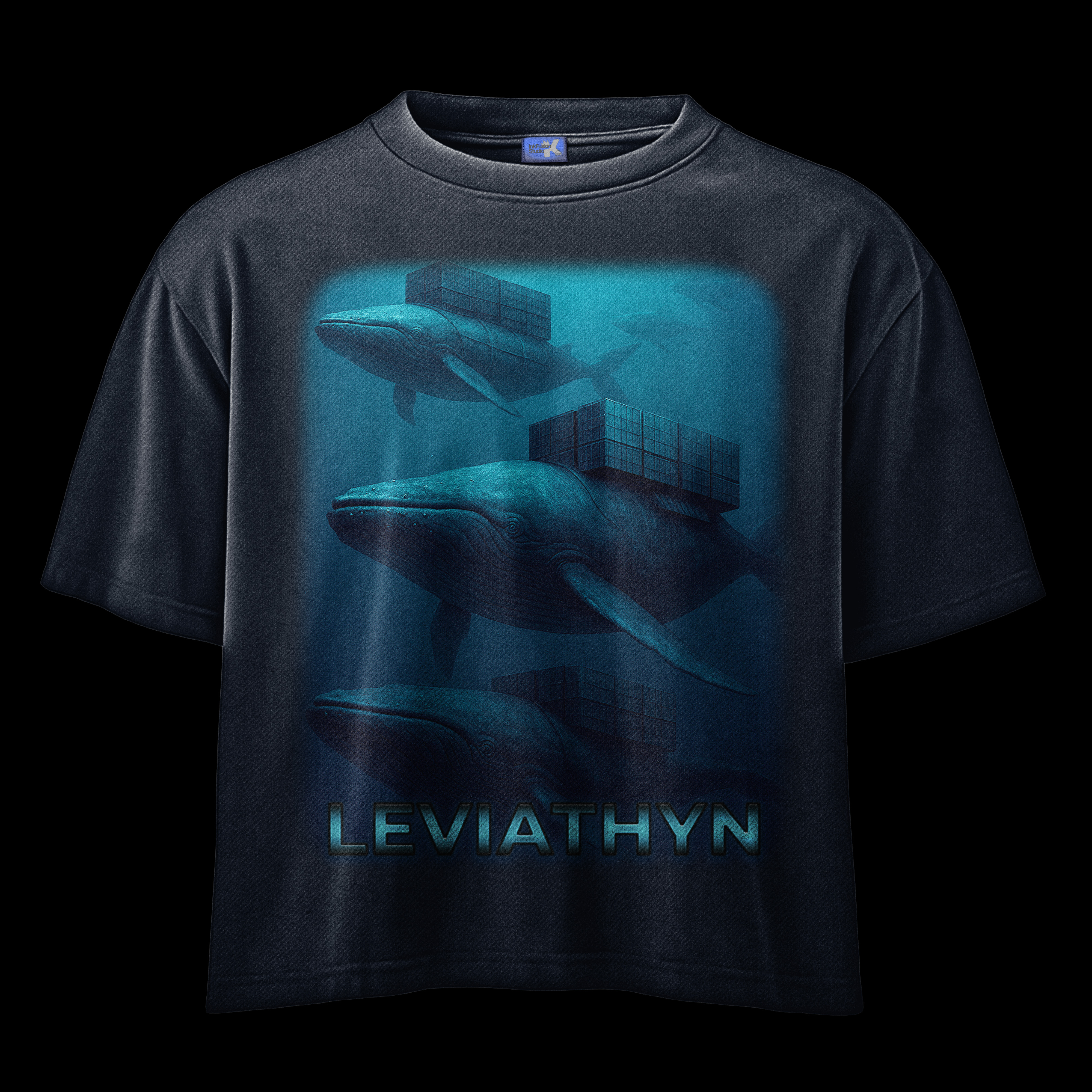
Leviathyn Organic Tee
Heavyweight organic ringspun cotton featuring custom whale container transport schematics.
 Sold Out
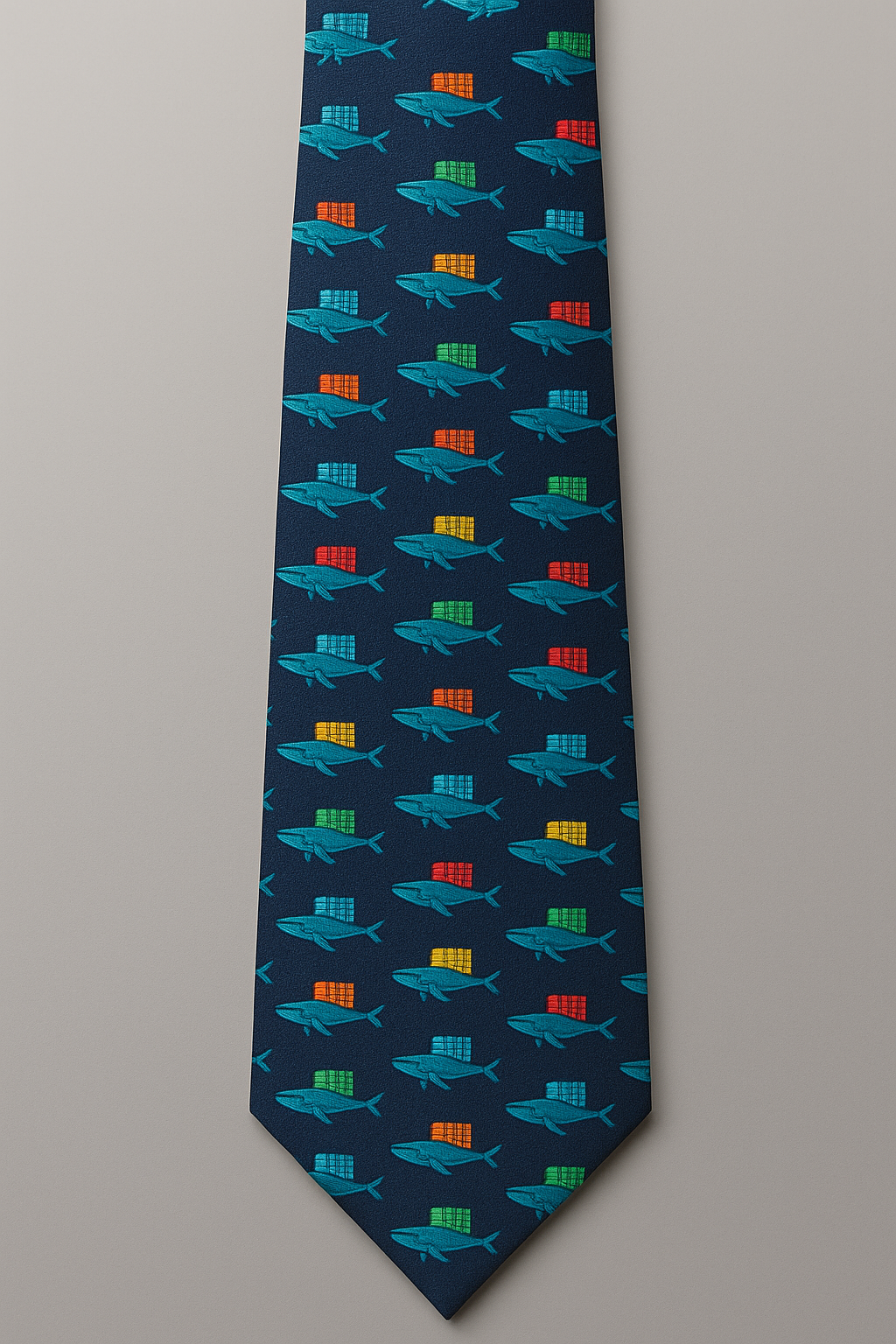
Leviathyn Maritime Silk Tie
100% woven mulberry silk in deep ocean navy with subtle repeating pod vector motifs.
Questions? Answers.
Key facts on cetacean transit economics, animal welfare, and navigation safety.
A Symbiotic Biological Vessel (SBV) is an oceanic transit designation developed by Leviathyn under UNCLOS Article 238 and IMO green route standards. Instead of commissioning carbon-heavy diesel container vessels, SBVs partner with baleen cetaceans, the most calorically efficient long-distance navigators on Earth, using non-invasive sensory guidance and buoyant slipstream pods to transport freight with zero emissions and zero physical harm.
No. Humanity has partnered with large working animals for millennia, from draft horses to work elephants. Large baleen whales are the most calorically efficient long-distance navigators on Earth, naturally traveling thousands of miles along consistent oceanic routes every season. Leviathyn simply equips these SBVs with zero-drag cargo pods and safe sensory vectoring.
Non-invasive transcranial ultrasound transducers project gentle, micro-sensory directional cues directly into the cetacean parietal cortex. To the whale, the sensation is identical to natural acoustic or temperature gradients, prompting natural course alignment without discomfort or physical restraint.
Pods do not use penetrative hooks or harnesses. They are constructed from positive-buoyancy syntactic foam that rides freely on the dorsal slipstream using gentle hydrodynamic vacuum seals. An acoustic quick-release and automatic depth-triggered safety release ensure pods detach instantly if depth or stress thresholds are reached.
Conventional container shipping burns millions of dollars in heavy fuel oil and faces steep carbon penalties under the EU Emissions Trading System and IMO net-zero benchmarks. Leviathyn eliminates fuel cost entirely, delivering unmatched margin profiles and generating high-value verified blue carbon credits and direct Scope 3 insets.
Let's talk whales.
Connect with our commercial logistics directorate to submit technical questions, execute an enterprise LOI, or schedule seasonal route allocations.